






‣ Robin's Songwriting Blog & News
|
Mon, Nov 7th, 2011 10:34 PM PST
ADD EMOTION TO YOUR LYRICSLet’s say you’re in love with someone and you want to let that person know how you feel. You could simply walk up to them and say, “I love you.” That might work. Or you could make an effort to create the right surroundings: a walk along the beach, holding hands on a summer evening under a twilight sky, and as the moon rises and hangs like a giant disco ball in the sky, you whisper, “I love you.”
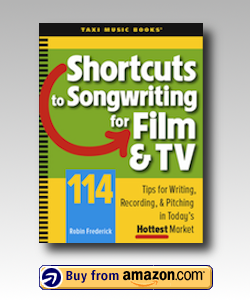
Without a doubt, the second option seems more likely to convey your I-love-you message convincingly (except for the disco ball). And while it’s not guaranteed to make the other person love you in return, as a songwriter it’s definitely going to give your audience a better chance to feel what you’re feeling and believe you really are in love! And that’s what songs are all about. When you give your listeners the details of an experience in a way they can see, feel, and touch, you draw them into the experience: they picture the beach at sunset, feel the warm air, and hear the words that are spoken. They’re involved in your situation without even thinking about it. Using the physical senses—sight, sound, smell, touch, taste—to convey emotions is much, MUCH more effective than simply telling your audience what you feel. Here’s how you do it. => Use the physical experience of emotions Emotions are physical things—that’s probably why they’re called “feelings.” We actually feel them in our bodies. Let’s use the emotion of “falling in love.” What does it physically feel like? Think back to a time when you were crazy in love and try to describe the physical sensation in words and phrases. Here are a few ideas that I think of: Dizzy. Floating. Flying. Dreaming. Can’t stop smiling. Feel like singing. The world looks brighter, like there’s more sunshine! Make a list of words that describe how you feel when you're in love. They may be similar to ones I just mentioned. Go ahead and use them and add some more. If you can't think of any right away, take your time. Add to your list throughout the rest of the day. => Use a family of associated words and images Once you have a list of words and phrases that physically describe the feeling, make another list of images, ideas, and objects you associate with these. Most words come with a family of associated ideas. So, “flying” might suggest kite, balloon, bird. “Dizzy” could suggest carnival ride, which could then suggest cotton candy, etc. Don’t leave a word off just because you think it doesn’t make sense. If it occurs to you in connection with another word, go ahead and write it down. => Turn your word lists into a lyric Choose one or more of the words/phrases in your list and use it in the opening line of a verse or chorus. For instance I could start with “Flying like a big red balloon” because “flying” was in my description of how love makes me physically feel and “balloon” was an associated word. I had “sunshine” on my list, so next I might try... “Shining like the sun on the end of a string. Now I’m picturing this balloon/sun tied to someone’s heart. I like that image so I’ll use that. “Tied to your heart, whenever you’re around. Rising light as air, off of the ground.” The “around/ground” rhyme was a little gift, so I’ll keep it for now but don’t worry too much about rhyming. Just keep building your images and sensations. As you think of more, add them to your lists and use them as needed. You don’t want to put an image or physical sensation in every line. But be sure to use enough that your listeners know what the emotion feels like so they can experience it themselves! This is great raw material to build a song on, and an important component of effective lyric writing. Go ahead and choose an emotion. Make your own word lists based on it and try to rough out a chorus or verse. Copyright 2011 Robin Frederick Based on "Shortcuts to Songwriting for Film & TV" available at Amazon.com. Wed, Sep 7th, 2011 7:03 PM PDT
GET MOTIVATED AND NEVER STOP WRITING!Most of the time, I can think of a million things I'd rather do than sit down to write a song. There's a TV show I want to watch, or a friend I need to call, or a Facebook page to update. Suddenly Life is filled with things to do that are much more interesting and urgent than writing a song! Of course I feel bad that I'm not getting any writing done but I just can't seem to get motivated to do it! This is something ALL songwriters have to deal with. It usually happens when...
-- You can't think of anything you want to write about or... -- There are too many other demands on your time or... -- You're stuck on a song that's going nowhere or... -- Starting a new song seems overwhelming or... -- The people around you don't take your songwriting seriously or... -- You feel like you don't have enough talent to do this or... or... or... If any of these sound familiar (and they probably DO!), if you have trouble getting motivated to start, work on, or finish your songs, then try some of these ideas to get your songwriting on track! 10 TRICKS FOR GETTING MOTIVATED 1. FIND A PHRASE A DAY. Writing songs is something you can do ALL THE TIME. You don't have to wait to get motivated! Keep your ears open for lyric phrases when you're with friends, watching TV or a movie, or sitting in a crowded place. (It may not be polite to listen in to a stranger's conversation but songwriters do it all the time!) Keep them in a notebook or record them on your cell phone to retrieve later. You can use these phrases as song titles or lyric lines. Once you've got a couple lines that excite you, you'll be eager to get going! 2. TURN IT INTO A GAME. Songwriting can be fun. You don't have to lock yourself away for hours and break your brain! Use the Songwriting Games on my website to get ideas: http://www.RobinFrederick.com/sandbox.html or practice one of the songwriting shortcuts in my books or on my website: http://www.RobinFrederick.com/tips.html. Once you've got a few ideas you're excited about, you're on your way! 3. EMBED SUCCESSFUL SONGS YOU LIKE. You can be working on your songwriting without actually writing a song. Learn to play and sing a hit song you like. If you don't play an instrument, buy a karaoke track at iTunes or Amazon.com and sing along. This counts as songwriting motivation -- see #4. 4. GIVE YOURSELF MORE CHOICES. When I'm stuck on a song, that's when I REALLY don't feel like writing. Use #3 to help you find new solutions to problems and give yourself more choices. How did the hit song solve that problem? Was there something this song did that you liked? Try using that technique yourself, even if it's only a song fragment. Record it. You can finish later. 5. FIND A COLLABORATOR. Here's one of the best motivators I've EVER found! When someone else is expecting me to do something, I'm much more likely to do it! You can look for collaborators at The Muses Muse message board: http://www.musesmuse.com/forums/index.php. Scroll down to Songs in Development/Collabs. Also, the TAXI Forum's "Collaboration Corner": http://forums.taxi.com. (You don't have to be a TAXI member.) SongU.com puts collaborators together each month: http://www.SongU.com. (You do have to be a member.) Check out any collaborator's work first before contacting. If you're uncomfortable about sharing your original lyrics or melody, send only a verse or chorus to start and see how things go. 6. REVISIT YOUR OLDER SONGS. Go back through your notebooks and recordings to see if there's anything you want to work on. You won't have have to start from scratch and as soon as you hear something you like, you'll want to get working on it. 7. WRITE STANDING UP. Sitting at a desk always feels more like work to me. Try standing while you write. Put a piece of paper on a table or book shelf and write a few lines. Try singing them without playing an instrument. Add a few more lines. Once you have something interesting, then pick up your guitar or sit down at your keyboard or desk. 8. USE A TAXI LISTING. If you're interested in pitching your songs to publishers and music supervisors, the TAXI listings are a useful resource. The listings will give you a VERY accurate idea of what the music industry is looking for. Choose a listing and write a song that you think would work for it. You can find the listings at http://www.taxi.com/industry.php. 9. WRITE TWO SONGS AT ONCE. If you're stuck on a song and don't feel like working on it, start another song. Often ideas will start coming for both songs. Just be sure to keep them straight. Use two sheets of paper, one for each song. Record your ideas separately. 10. SET SMALL GOALS. Sometimes it can all seem overwhelming. Create a one-week goal. Make it something you can reasonably do (Don't make it something like "Write a hit song."!!!) and keep it easy. The following week, make your goal a little more challenging and so on until you feel your accomplishing something each week. Better to do it in small bits and do SOMETHING, than make your goals too intimidating and accomplish NOTHING. We all know it's important to practice song craft and keep that creative muscle working but just like going to the gym, we don't always do it. It's okay to give yourself a holiday, but make sure that's the exception and not the rule . Even if you only work out for 10 or 15 minutes a day, over time it will make a BIG difference in your skills. And when you get that writing gig, you'll be ready for it! Copyright 2011 Robin Frederick. For more tips, LIKE my Facebook page: http://www.facebook.com/songwriting.tips Mon, Aug 1st, 2011 7:39 PM PDT
WHAT'S THE HARDEST PART OF SONGWRITING?I share so many of my own songwriting gripes and difficulties in my articles and books, by now everyone pretty much knows what I wrestle with. But I often wonder what OTHER songwriters find difficult about songwriting. So, I decided to take a poll on my Facebook site. I've had over 180 responses so far. (In just a moment, I'll give you a link to the poll so you see the results and weigh in, if you haven't already.)
The question was "What do you think is the hardest part of songwriting?" I started out with just 4 categories - Lyrics, Melody, Chords, Song Structure - the usual suspects. I asked people to vote for the ones that were hardest for them and I invited them to add their own categories - which they promptly did! They added challenges like "Getting started," "Making an old idea more contemporary," "Getting song ideas down," "Communicating with listeners," and more. They'll get no argument from me! These are all difficult aspects of songwriting and I'm always looking for ways to make them easier. TO SEE THE POLL & VOTE: http://on.fb.me/ePsU9q For free songwriting tips, “Like” the FB page here: http://www.facebook.com/songwriting.tips YOU ARE NOT ALONE The most important insight I took away from the poll is that EVERYONE has trouble with at least one aspect of songwriting – often the same areas I have trouble with! Even successful songwriters know what it’s like to hit a wall! But pro songwriters have one advantage: they can work their way through the problem by relying on their command of song craft. Songwriting is part inspiration and part hard, slogging work. The inspiration part is always fun. We all love that moment when a great line just pops out or the idea for a song is born in a flash of energy. But relying on inspiration alone to carry you through is not enough, especially if you’d like to market your songs to the music or film & TV industries. When you decide to make a living (or even a little extra income) from songwriting, you need to be able to bust through those trouble spots. Song craft can help you do it. So, here are 5 short song craft tips in the areas that poll takers say are the hardest: #1. LYRICS I’ve been posting so many lyric tips lately, it’s hard to pick just one but try this... Listeners love to feel they’re witnessing an intimate, personal moment. Drop the listener right into the middle of a situation by using dialogue lines. “Go ahead. Keep talking!” or “Don’t turn away just when I need you” or “Let’s get out of here. Run away with me!” Mix these with emotional images, sensations, and details. Examples: “You’ve slammed the door a thousand times.” or “Your skin is warm and soft beneath my touch.” Pump up your action words: Instead of “You left...” try “You slithered off...” or “You skipped away...” phrases that convey more emotional energy. Rewrite a lyric using these ideas to create a lyric with more impact! #2. MELODY When writing melody & chords at the same time, we tend to fall into patterns, like starting lines when the chord changes. Try recording or sequencing a chord progression first. Then write a melody to it. Experiment with starting on different beats, singing a phrase through a chord change, or adding syncopation by emphasizing upbeats. Change the notes and rhythm patterns of your melody until you’re happy with it. Record it then take a break. Come back later with fresh ears and listen to it. If the melody feels too predictable, try lengthening a line, starting on a different beat, or adding a pause in an unexpected place. If the melody feels unfocused or hard to remember, try repeating a line more often. Finding the right mix of repetition and variation of melody lines is the key to writing catchy, memorable songs. #3. FINDING A UNIQUE IDEA There aren't a lot of new, never-before-heard song ideas. To give listeners something they haven't heard before, try a unique approach to your theme or a new angle. Try a different attitude towards a situation (“You left me & I'm so glad!”) or an unusual Point of View. Remember The Beatles' "She Loves You"? THAT was a fresh point of view – It wasn’t about “me,” it was about “she” and “you” – the singer was present as a friend. Pick a question or concern we don’t often put into words: Blake Shelton’s “Who Are You When I’m not Looking?” is a great example. Look at your honest reactions to situations and people and you’re likely to find new ways of saying things. You can also get ideas from TV shows, books, and tabloid newspapers. Don't write the obvious. Look for something surprising! #4. GETTING EMOTIONS INTO YOUR SONGS Instead of telling a story, go deep into a single moment when the emotions reached a peak. Put yourself into that moment and imagine it as vividly as you can. How does it feel? What do you say or do to express the feeling? Describe it in physical terms. (Like walking thru fire. Riding a wave. Flying. Falling.) The more you use physical images and senses to describe an emotion, the more the listener is able to experience it and share it with you. This type of emotionally focused lyric works very well for both radio and film & TV. To find physical ways to describe emotions, play a simple “association game.” Choose an emotion and associate it with a color, a season, an object, a physical sensation. Then make a list of all the things that association reminds you of. Keep building wider levels of associations until you have three of four levels. Then write lyric lines using these associated images and sensations to express the emotion. (If you have my book “Shortcuts to Songwriting for Film & TV,” you can find out more in Shortcut #53. #5. DEVELOPING / FINISHING THAT GREAT IDEA Just like an artist sketches the idea for a painting in pencil before applying the final paint, try roughing out a sketch of your song. Get an idea of the flow, the path of the WHOLE song before trying to write those perfect lines for your first verse. Create the outline of your song based on a song structure. The most popular structure is: Verse / Chorus / Verse / Chorus / Bridge / Chorus. Write a line or phrase in each section giving a rough idea of the content. For instance, the chorus will include your title, so write it there. Add another line to support it emotionally. Then write a line for each verse and the bridge, a line that indicates what you're going to say in that section. Try answering a question suggested by the title in each song section. What do listeners need to know in order to understand the title, what it means, how it feels. If you sketch out your song, you won't end up repeating the same thing over and over and you won’t run out of things to say! Copyright 2011 Robin Frederick. Based on "Shortcuts to Hit Songwriting" and "Shortcuts to Songwriting for Film & TV" available at Amazon.com. Thu, Jun 2nd, 2011 9:13 AM PDT
Using old song ideas...If you keep a notebook of possible song titles and lines, there are probably a few you've had for a while and never used. You might have a whole verse or chorus that never got finished. Consider going back over these old ideas every few months. Obviously these lines had some strength for you or you wouldn't have taken the time to write them down. Sure, there will be a line or two that once captured your interest but no longer seems relevant. Toss them out. Look for lines that still resonate for you emotionally. Consider building a new song around one of these. It may not be the SAME song you would have written around that line a year ago. We all change as time goes on - learning new things, finding new interests, shifting emotional focus - so don't try to faithfully recapture your original idea. Write the song this line suggests to you NOW. Ask yourself why you're drawn to this line, what questions it brings up for you, what you want to say about it. Sketch out the structure for your song and plug in the line where you think it goes, then fill in around it. If you've got 30 minutes, try it today!
For more free songwriting tips, visit my Facebook page. Mon, May 16th, 2011 8:58 PM PDT
SONGWRITING IS LIKE RIDING A BICYCLE!Remember when you learned to ride a bike? It wasn’t easy! You fell down a lot, but you kept trying. At first you needed someone to hold on, keeping you steady. Then you used extra training wheels to help you stay upright as you pedaled. Then, finally, you were able to ride on your own. You had found that complicated thing called BALANCE. After that, it was a breeze! The process of writing songs is a lot like riding a bike. It’s all about finding a balance! => Balance Melody, Chords, Lyrics - Writing a song that is satisfying to your listeners involves finding a good balance between melody, lyrics, and chords. If you have a busy lyric with a lot of words, images, and ideas, then a melody that’s easy for listeners to follow might be the best accompaniment. An extreme example of balance between lyrics and melody can be heard in the Rap genre. Lyric content and lyric rhythm have taken over, while the melody notes have become almost a monotone. The Singer-Songwriter genre is often lyric heavy and you’ll notice that, while the melodies make use of interesting phrase lengths and phrase starts, there are plenty of repeated melody patterns — lines repeated in sets of two, three, or four lines, organizing the melody so listeners can take it in easily. On the other hand, if you have a complicated melody with lots of rhythmic interest, interval jumps, and maybe a key change in the chords, try keeping your lyric straightforward and easy to follow, maybe use more repetition in your chorus lyric than you normally would. A good rule of thumb: As the attention-grabbing quality of one of your song elements is raised, think about reducing the others. This doesn’t mean the other elements should become simple and predictable. Instead, try organizing them in patterns so listeners can quickly grasp what’s happening. => Study the balance in your genre – Each genre has a balance of melody, lyrics, and chords giving it a characteristic sound. For instance, the Pop genre tends to have plenty of melodic interest while keeping lyrics focused on an emotion – asking listeners to FEEL the lyrics rather than think about them. The Country genre, on the other hand, relies on lyric stories with plenty of physical detail. Listeners need to pay attention to the lyric in order to get the full impact. As a result, melodies tend to be a little less complex than in the Pop field. This doesn’t mean you can write a boring melody! You’ll still need to keep your listeners interested. But you might want to use fewer melodic twists than you would in the Pop genre. => Balance craft and inspiration – Balance is also an essential part of your approach to songwriting as a whole. Finding a balance between inspiration and song craft can help you express your deepest thoughts and feelings and in a way that listeners can understand and respond to. Inspiration is the heart of your songwriting. It’s what guides you, tells you what’s important, and delivers that brilliant line out of the blue. But inspiration can be a very personal thing and it may not always be there when you need it. Sometimes, it can even deliver inspired lines for a different song! But, if you balance it with a good amount of song craft, you can get the most from your inspiration, communicating effectively and surrounding those inspired gems with lines that support them. => It takes time to find your balance – Just like riding a bicycle, it takes practice to learn what good songwriting balance feels like. When you learn a new melody or lyric writing technique, don’t expect to immediately fold it into your songs and smoothly ride off into the sunset. There’ll be some wobbles and falls. You might scrape your knees a few times. But, just like you did when you were a kid, get back up on your bike and try again. Once you get the feel, you’ll be flying down the sidewalk with the wind in your hair in no time! => Get some training wheels - The best songwriting “training wheels” are hit songs! These songs already have good balance, the kind that listeners are comfortable with. This week, learn how to play and sing one recent hit song that you like. (You can find the current radio charts at http://www.BDSradio.com.) Notice the balance between lyrics, melody, and chords. How is the melody organized? Which melody lines are repeated and how many times? When do the lyrics simply repeat and when do they demand attention? Try writing a song with a similar type of balance. Best of all, like riding a bike, once you learn what balance feels like, you never forget! Copyright 2011 Robin Frederick. Based on "Shortcuts to Hit Songwriting" and "Shortcuts to Songwriting for Film & TV" available at Amazon.com. |
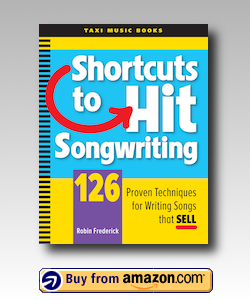
Over her 35 years in the music industry, Robin Frederick has written more than 500 songs for television, records, theater, and audio products. She is a former Director of A&R for Rhino Records , Executive Producer of 60 albums, and the author of "Shortcuts to Hit Songwriting." Robin currently oversees the A&R Team for TAXI, the world's leading independent A&R company.
Robin's books are used to teach songwriting at top universities and schools in the U.S. They're fun to read and filled with practical, real world information. Buy them at Amazon.com...
Shortcuts to Hit Songwriting Shortcuts to Songwriting for Film & TV


