







‣ Blue Flame
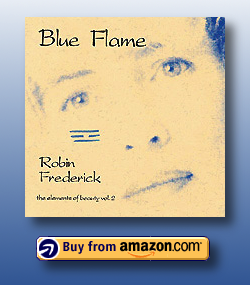
Buy it at CD BabyHow this song came to be... "Blue Flame" is a song in the troubadour tradition. The opening melody line is taken from a beautiful song by Bernart de Ventadorn, "Quan vei la lauzeta" ("When I see the lark..."), written more than eight centuries ago. Bernart very likely heard the melody sung by someone else and added his own words. This was a perfectly acceptable practice at the time, so I thought I would simply slip into the troubadour tradition myself and use one of their melodies. After the first few bars I took things in a different direction but tried to keep the overall "drone" feeling that is typical of medieval love songs. The lyric, too, is steeped in the troubadour ethos. Many troubadours, including several women, wrote love songs of timeless beauty and honesty. This is where our modern love ballad was born. Jaufre Rudel's "L'Amour de Loin" ("Distant Love") and Paul McCartney's "The Long and Winding Road" have a lot in common! I was also inspired by a beautiful troubadour song called "A chantar m'er..." written by the Countessa de Dia, a woman troubadour in the 12th century. It's one of a handful of songs written by women troubadours that have come down to us. There's a wonderful recording of it sung by Gisela Bellsola on the album TERRE DES TROUBADOURS. My friend Jean-Louis Pujol was a great help in my research into the troubadours. He translated several lyrics from Occitan into English for which I am very grateful. Thank you, J-L! |
Blue Flame Album: BLUE FLAME Words & Music by Robin Frederick I have never been tied to gravity Nothing could hold me down Nothing could hold me down And I have never taken more Than I could carry around No more than I could carry No more than I could carry But I know, I know, I know I will hold on to the fire I will never be the same No, nothing will be as it was, as it was, as it was No, never. I will follow you Blue Flame. I have lived all my life in a shadowland Nothing but shades of grey Nothing but shades of grey But here you are, shining in the darkness Calling me, leading the way A bright, shining northern star You are my Northern Star And I feel, I feel, I feel My world is suddenly on fire I will never be the same No, I will not live as I did, as I did, as I did No, never. I will follow you Blue Flame |
Copyright 2003 Robin Frederick / Songs On The Wing (ascap). All rights reserved.
To Top of Page
Robin has written more than 500 songs for television, records, theater, and audio products. She is a former Director of A&R for Rhino Records , Executive Producer of 60 albums, and the author of "Shortcuts to Hit Songwriting" and Shortcuts to Songwriting for Film & TV." Robin's books are used to teach songwriting at top universities and schools in the U.S. They're fun to read and filled with practical, real world information. Buy them at Amazon.com... Shortcuts to Hit Songwriting Shortcuts to Songwriting for Film & TV |